
Mesa Premier Cabinets does the cabinet refacing Mesa homeowners choose when the cabinet boxes are still in good shape and the fronts are what's wrong. If you want to reface kitchen cabinets, the work is simple to describe: we take off the old doors and drawer fronts, cover the visible faces of the boxes with new cabinet veneer, and hang new cabinet doors and drawer fronts with new hinges and handles. The sink, the stove and the layout stay where they are. Nothing gets torn out of the walls. It is the reface vs replace question answered the honest way for a Mesa, Arizona kitchen: keep the boxes that still work the way kitchen cabinets should, and replace only the layer everyone sees.
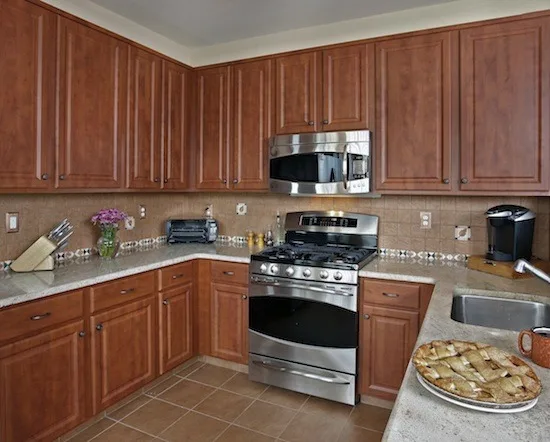 Refaced
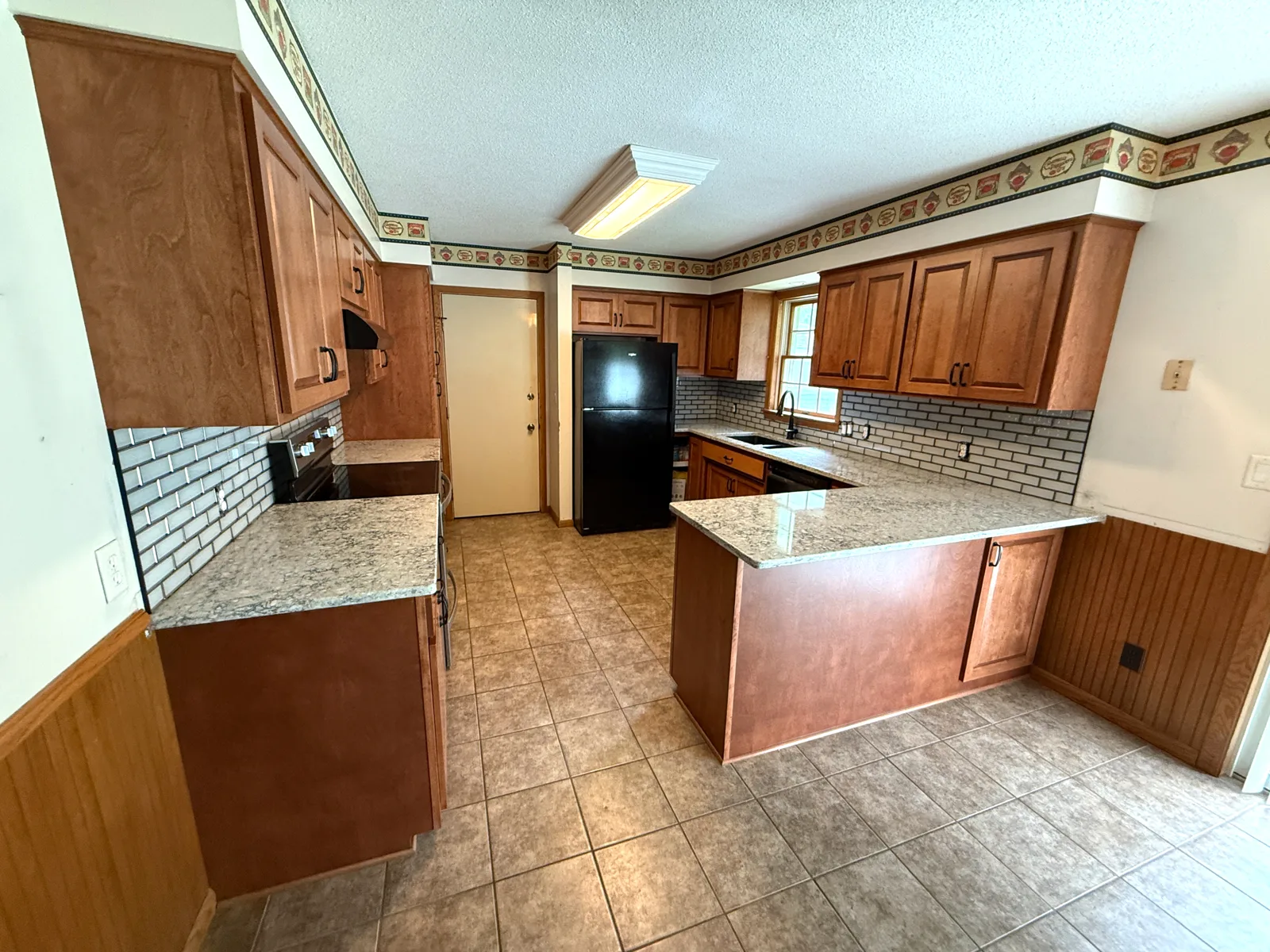
The original boxes, counters and floor stayed. New doors, drawer fronts and a cherry veneer went over the frames.
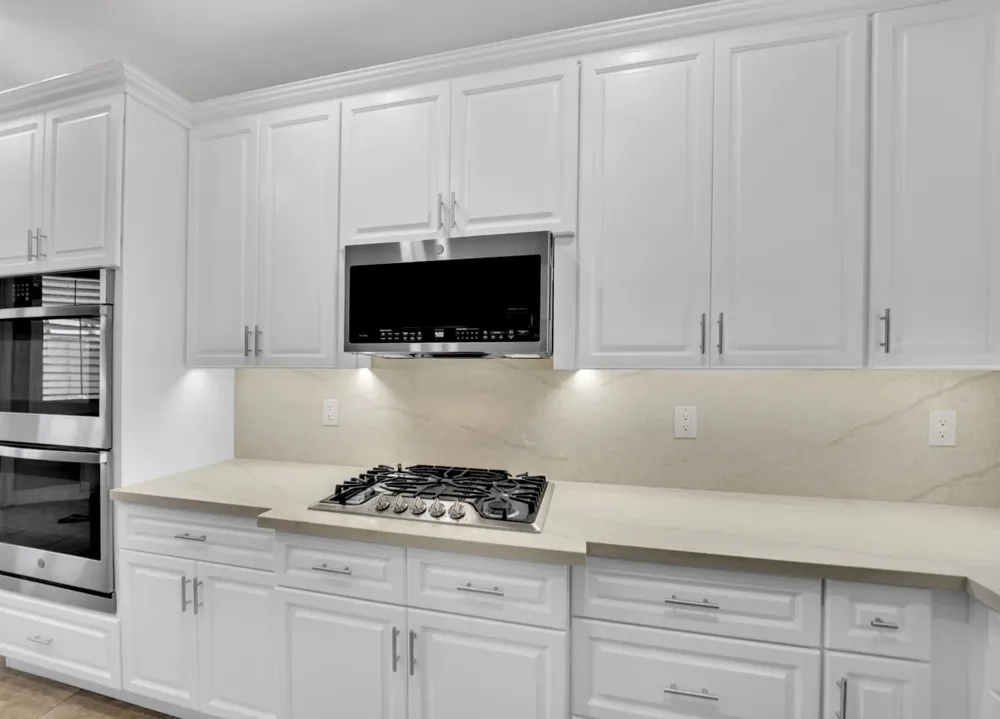 Replaced
The old cabinets came out entirely. Every box in this kitchen is new, including the oven tower.
A lot of kitchens around Mesa are good candidates. Think of the oak and laminate cabinets in homes built from the seventies through the nineties, in places like Dobson Ranch and Las Sendas. The boxes were often built well. The flat slab doors, the orange-toned finish, and the worn edges around the handles are what date the room. The first honest question in any reface vs replace decision is whether the boxes underneath are worth keeping, and that is the question we answer before we talk about door styles. Our work is licensed and insured, and the written estimate comes before anything is ordered.
Below is cabinet refacing Mesa homeowners ask about, in full: what it is, what it costs, when it works and when it won't, and how a job goes from the first visit to the last walkthrough.
What refacing is, and what stays and goes
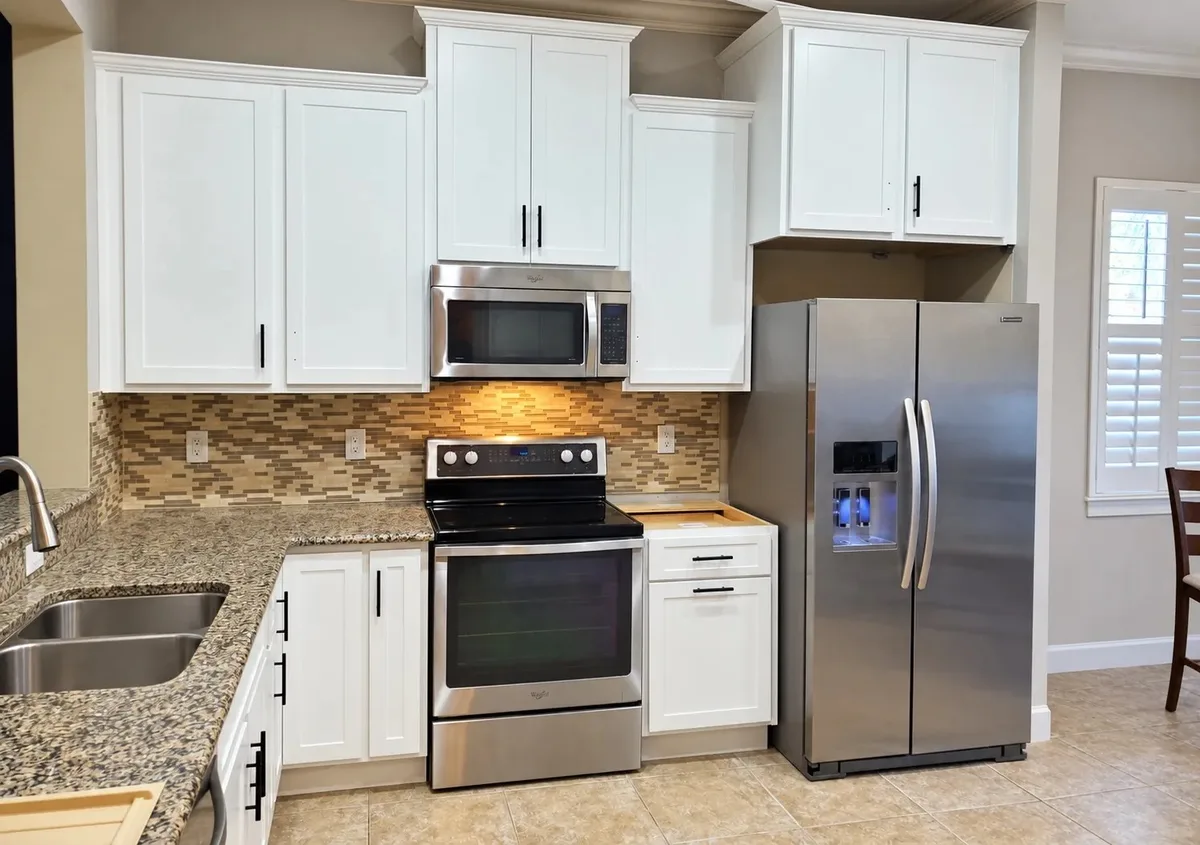
Your cabinet boxes are the cabinets. The doors and drawer fronts are the part you look at. Refacing replaces the part you look at and keeps the structure.
What goes: every door, every drawer front, the old hinges and handles. The visible faces of the boxes, meaning the frame around the openings and the exposed end panels, get a new surface so they match the new fronts.
What stays: the boxes, the layout, the shelves inside, and in most jobs the drawer boxes and their slides. Countertops, sinks, flooring and appliances are separate decisions. Some people replace the counters at the same time, as the pair below shows, and some leave them alone.
The reason this works is that most of what you pay for in a new kitchen is demolition, the boxes themselves, and the install around the plumbing and electrical. Refacing skips all of that and spends the money on the part you see every day.
Before and after
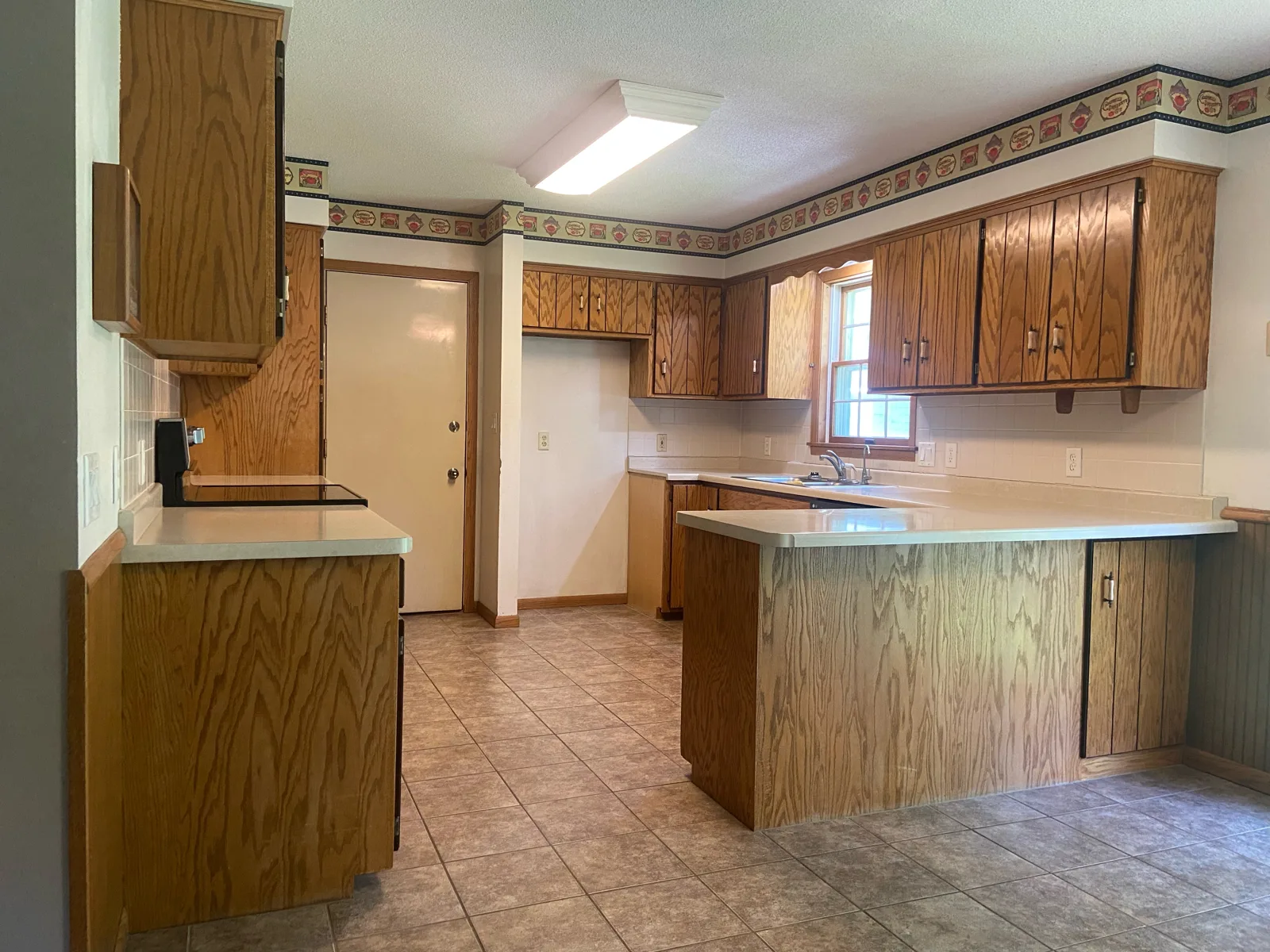
 BeforeAfter
BeforeFlat, vertical-plank oak slab doors and drawer fronts, with pale laminate counters and a white tile backsplash. The wallpaper border at the top of the wall adds to the dated look. Look at how plain the door faces are. Slab fronts like these have no shadow lines, so the whole wall of cabinets reads as one flat surface, and that flatness is a big part of why the room feels older than it is. The refrigerator is out of its alcove for the photograph.
AfterThe same room, with the same boxes, layout, peninsula, floor and wallpaper border. The change is new raised-panel birch doors and drawer fronts in a nutmeg stain, black handles, new quartz counters and a grey subway-tile backsplash. Notice what did not move: the cabinet runs, the peninsula and the sink wall are all where they were. Raised panels add depth and shadow, so the same cabinet footprint looks like a different kitchen. The counters and backsplash were a separate choice from the reface, and the refrigerator is back in its alcove.
What it costs
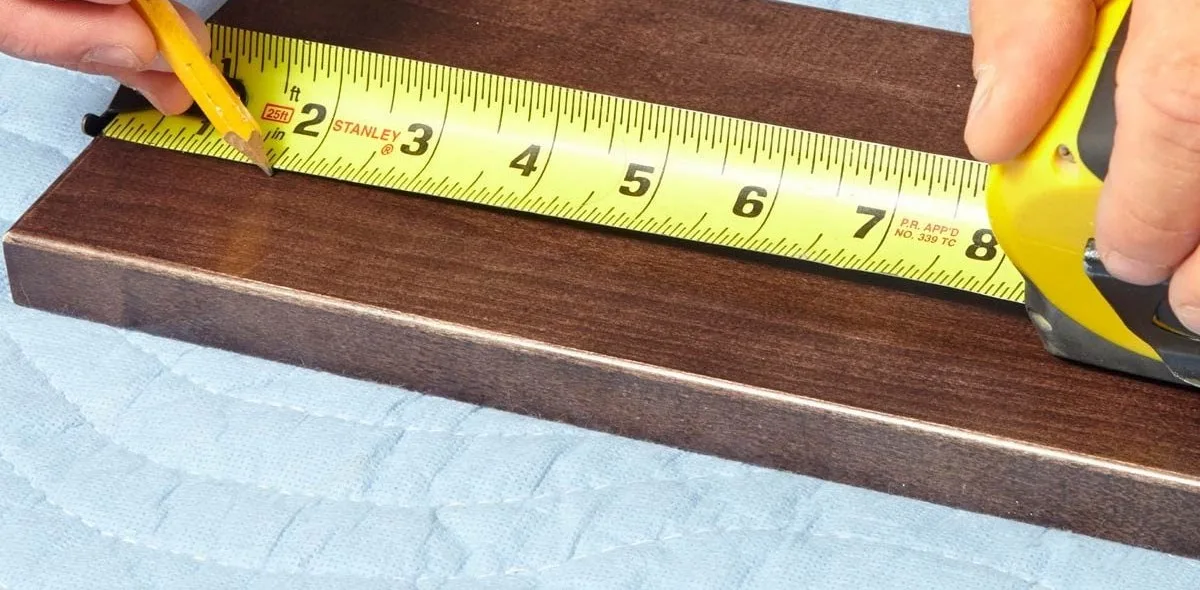
For a typical Mesa kitchen, Mesa Premier Cabinets' current price to reface kitchen cabinets runs about $7,000 to $15,000. That covers new doors and drawer fronts made to your measurements, new surface on the visible box faces, hinges, handles and installation. The written estimate governs, and it is built from your own kitchen, not from this range.
Where your kitchen lands in that range depends on a few things:
- How many doors and drawer fronts you have. A small galley kitchen with around two dozen fronts sits at the low end. A large kitchen with a pantry wall, an island and thirty-five or more fronts sits at the high end.
- The door style and material. A flat or shaker-style door costs less than a raised-panel door in solid birch or maple. Wood species and stain add to it.
- The box faces. If the boxes need repair before they can take new veneer, that is added labor.
- Hardware. Standard handles are in the figure. Specialty pulls and soft-close upgrades add to it.
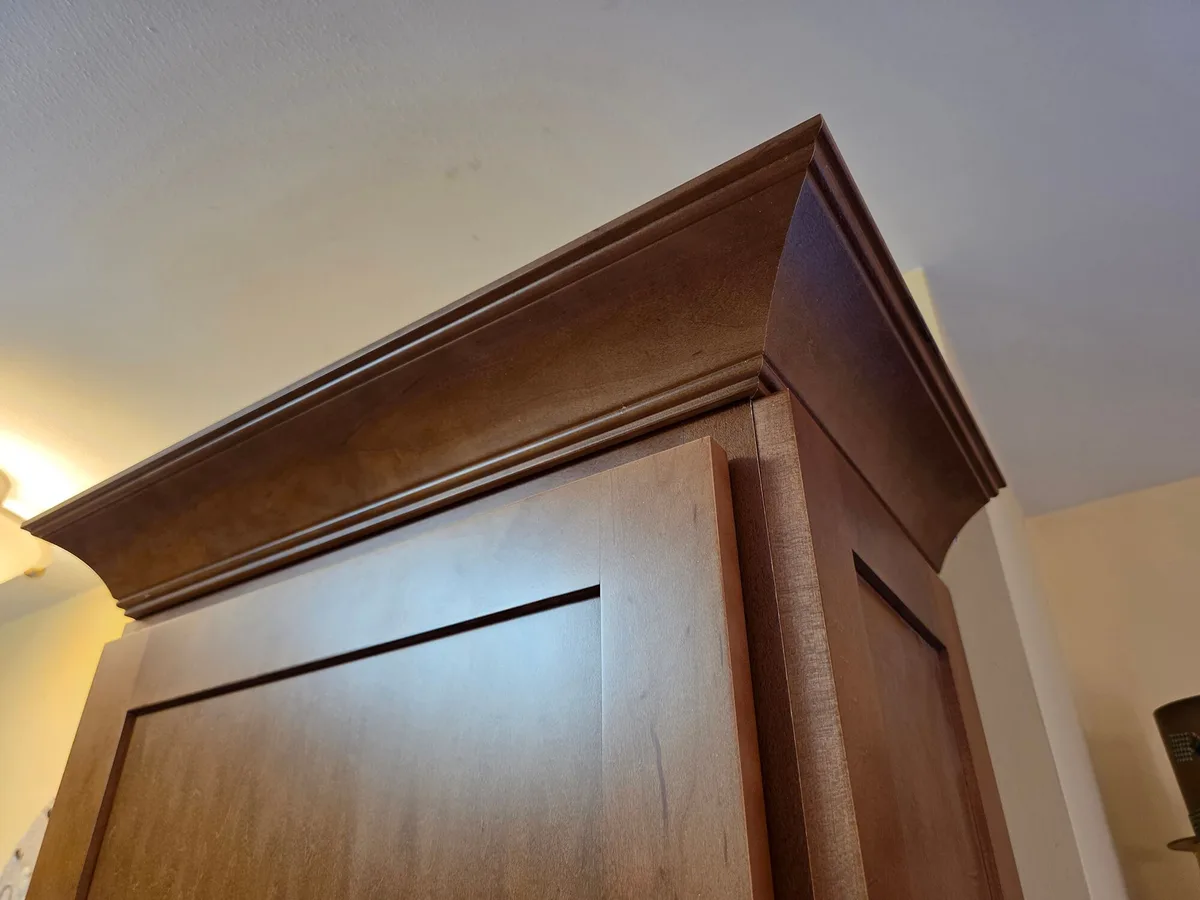
- Extras. Crown molding, glass-front doors, and end panels that need to be matched are priced when you ask for them.
Countertops and backsplash are not in this range. If you want quartz as in the pair above, that is priced separately and goes in the same written estimate.
For comparison, replacing the same kitchen with new custom cabinets starts well above the top of this range and goes up from there. The kitchen cabinets page covers that price. Refacing often costs roughly half of replacement for the same kitchen, which is the reason many homeowners with sound boxes choose it.
When refacing works, and when it won't
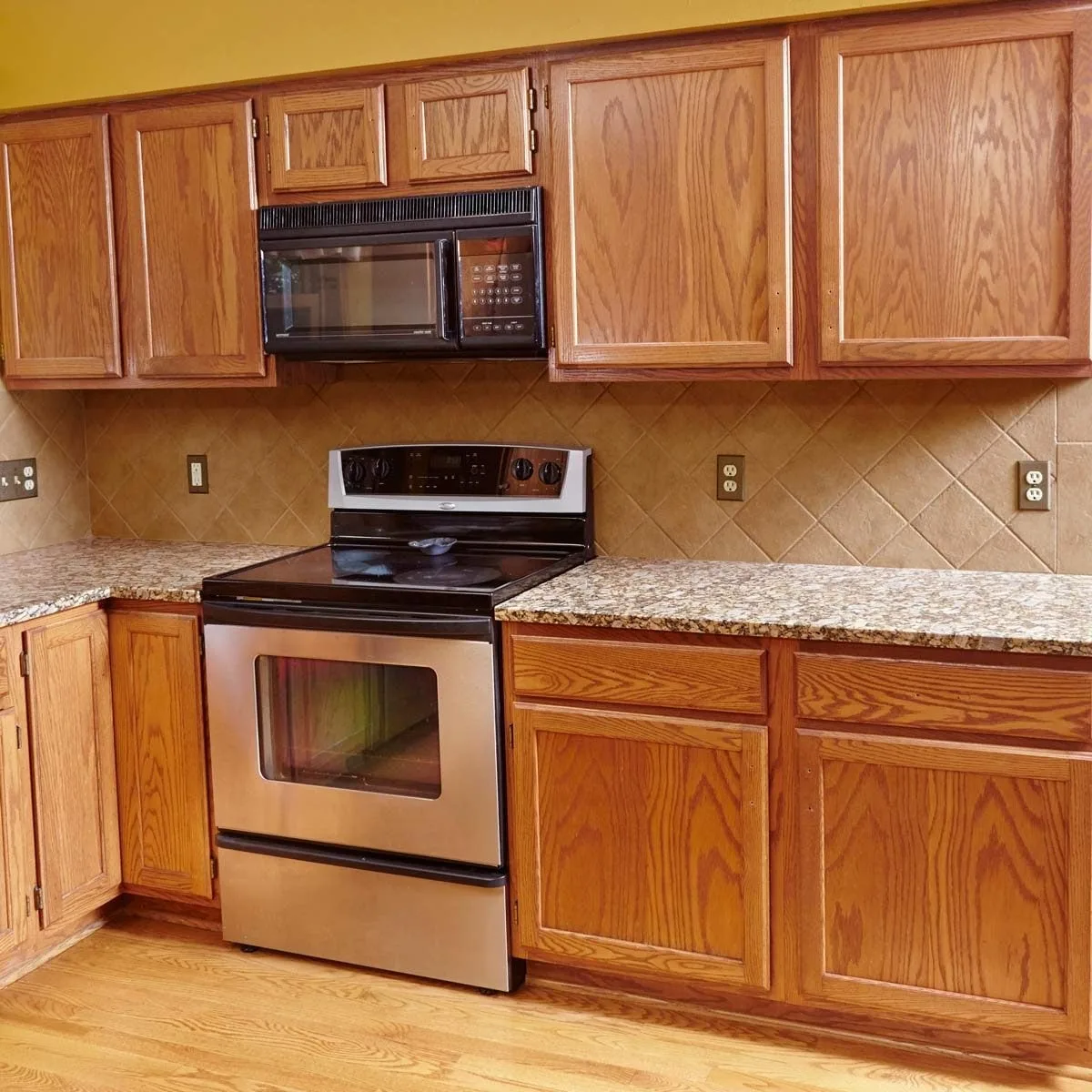
Refacing is the right call when the boxes are square, solid and in a layout you like. We check that at the first visit. Here is what we look at.
It works when: - The boxes are plywood or solid wood and haven't swollen from water. - The doors close square and the frames aren't sagging. - You are happy with where the sink, stove, and refrigerator sit. - The problem is the look: dated finish, worn edges, slab doors you've outgrown.
It will not work well when: - The boxes are particleboard that has swollen or crumbled, usually around the sink where a slow leak went unnoticed. New fronts will not hold on bad boxes. - The layout is the problem. If you want the sink moved, an island added, or a wall opened, you are replacing, because the boxes have to move. - The boxes are racked or sagging so badly the new doors will never hang straight. - The kitchen is too small in storage and you need more cabinets, not better-looking ones. Refacing doesn't add cabinets, though it can often be paired with a few new boxes. See the mix question below.
Our job at the first visit is to tell you which side your kitchen falls on, including when the answer is replace. If it is replace, we say so and send you to the kitchen cabinets page for that work.
What happens to the insides
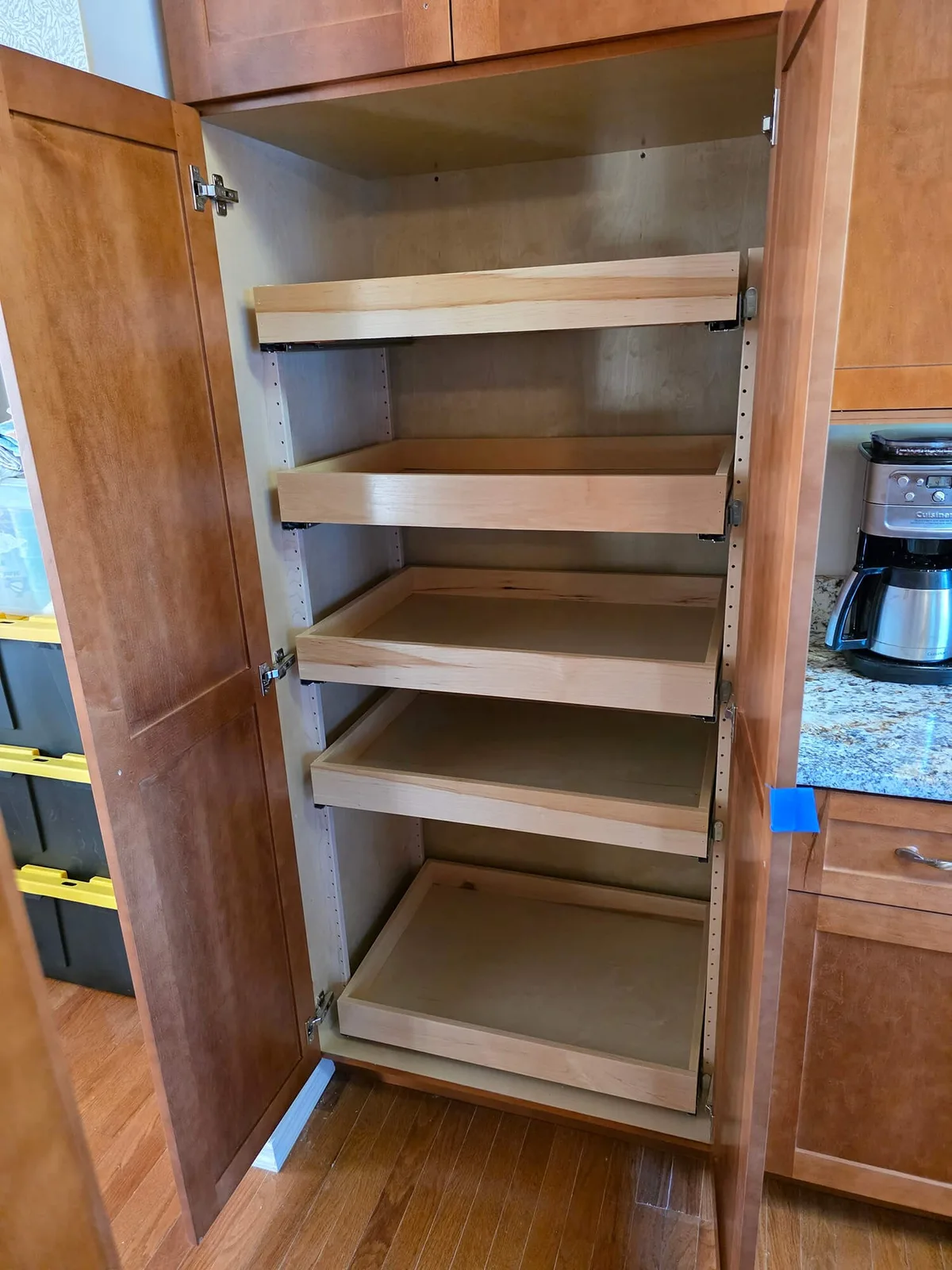
Refacing changes what a kitchen looks like from the doorway. Customers reasonably ask what it does for the inside of the cabinets, and the honest answer is: only what we agree to add, because the boxes stay.
The shelves, the drawer boxes and the cabinet interiors you have now are the ones you keep. That is the right answer when they are sound, and it is why the box check matters so much on this page. But a refacing job is also the natural moment to fix the insides that never worked, while the doors are off and the kitchen is already a job site. Roll-out trays in a deep base cabinet, so the back of it stops being storage you cannot reach. A trash pull-out where the can currently stands at the end of the run. Drawer dividers, a cutlery tray that fits the drawer it lives in, a lazy turntable in the corner. New drawer boxes where the old ones are stapled particleboard giving up at the corners, fitted to the existing openings and running on new slides, so the drawer you use most stops sagging every time it opens.
These are priced as their own lines in the estimate, and we will tell you which ones earn their cost in your kitchen and which are decoration. A refaced kitchen with its worst two cabinets fixed inside is a better job than a refaced kitchen that only photographs well, and it still lands well below the price of replacing boxes that did not need replacing.
Choosing a door style
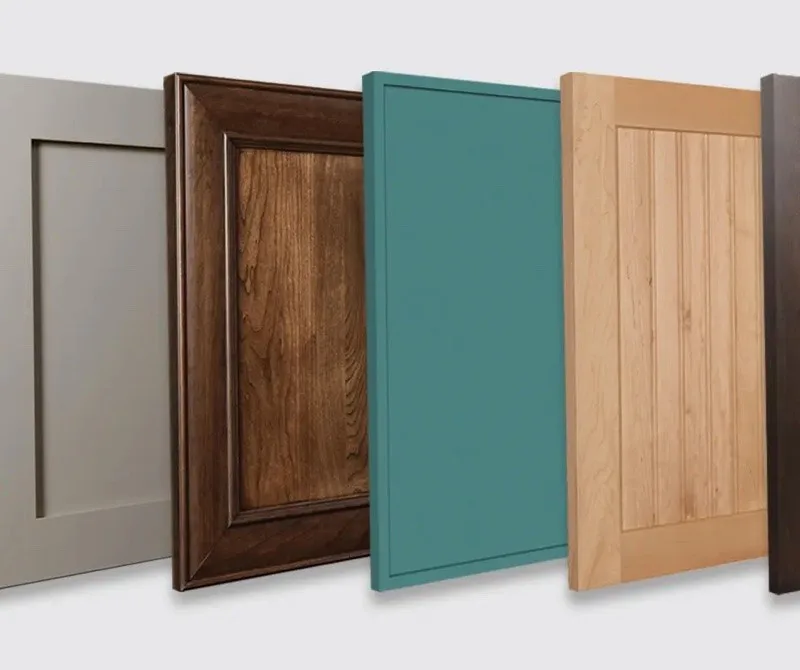
You choose three things: the door style, the material or finish, and the hardware.
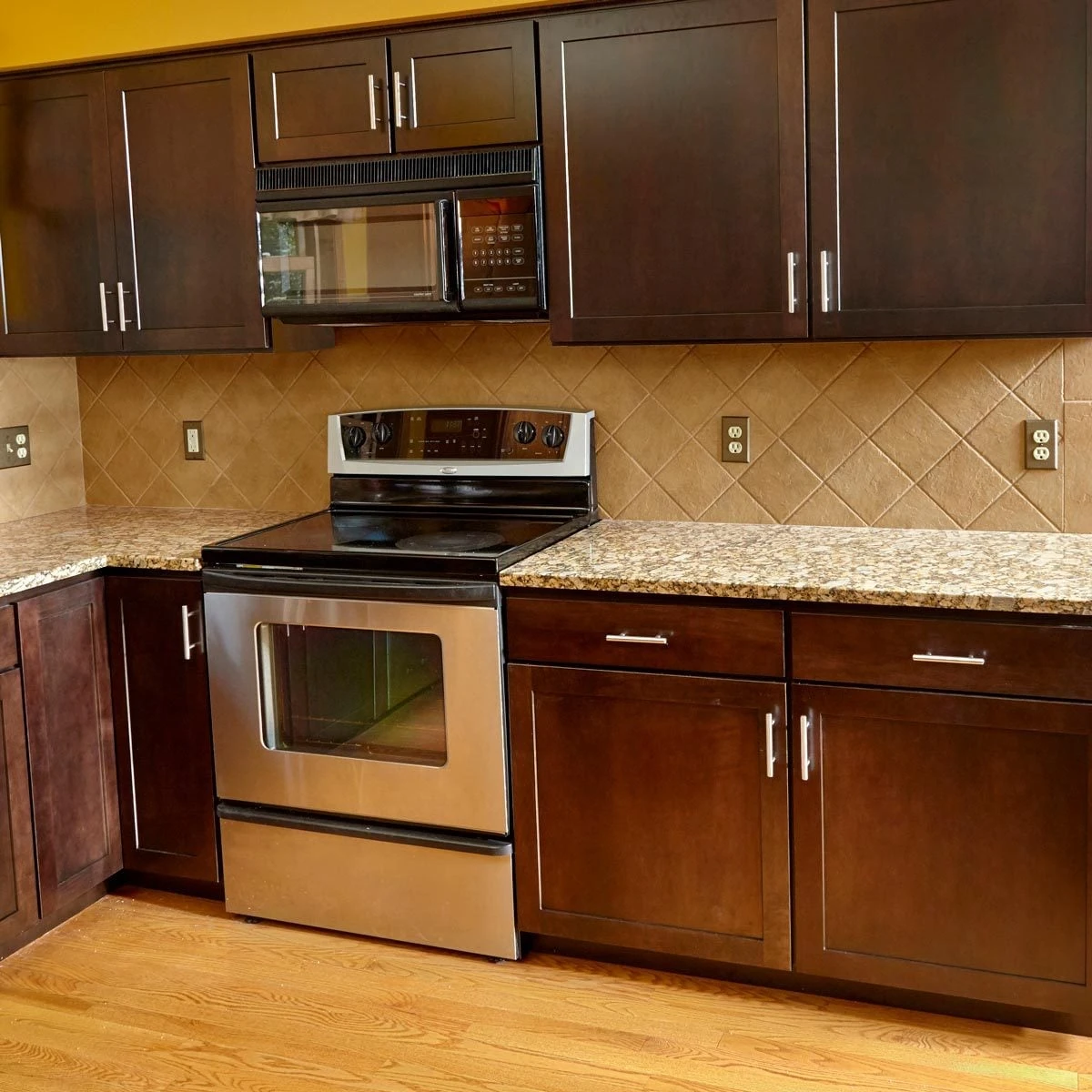
Style. Shaker, a flat panel with a simple frame, is the most common choice and the easiest to live with. Raised panel, as in the pair above, has more detail and suits traditional kitchens. Flat slab is clean and modern. Glass-front doors can replace a few doors on an upper run if you want to display things.
Material and finish. Birch and maple take stain well. Painted finishes in white and grey are popular and show the door style clearly. You can bring a sample or a photo to the first visit.
Hardware. Handle size affects how the door looks and how comfortable it is to use. We go over the options with you at the table when you choose the doors.
How the job goes
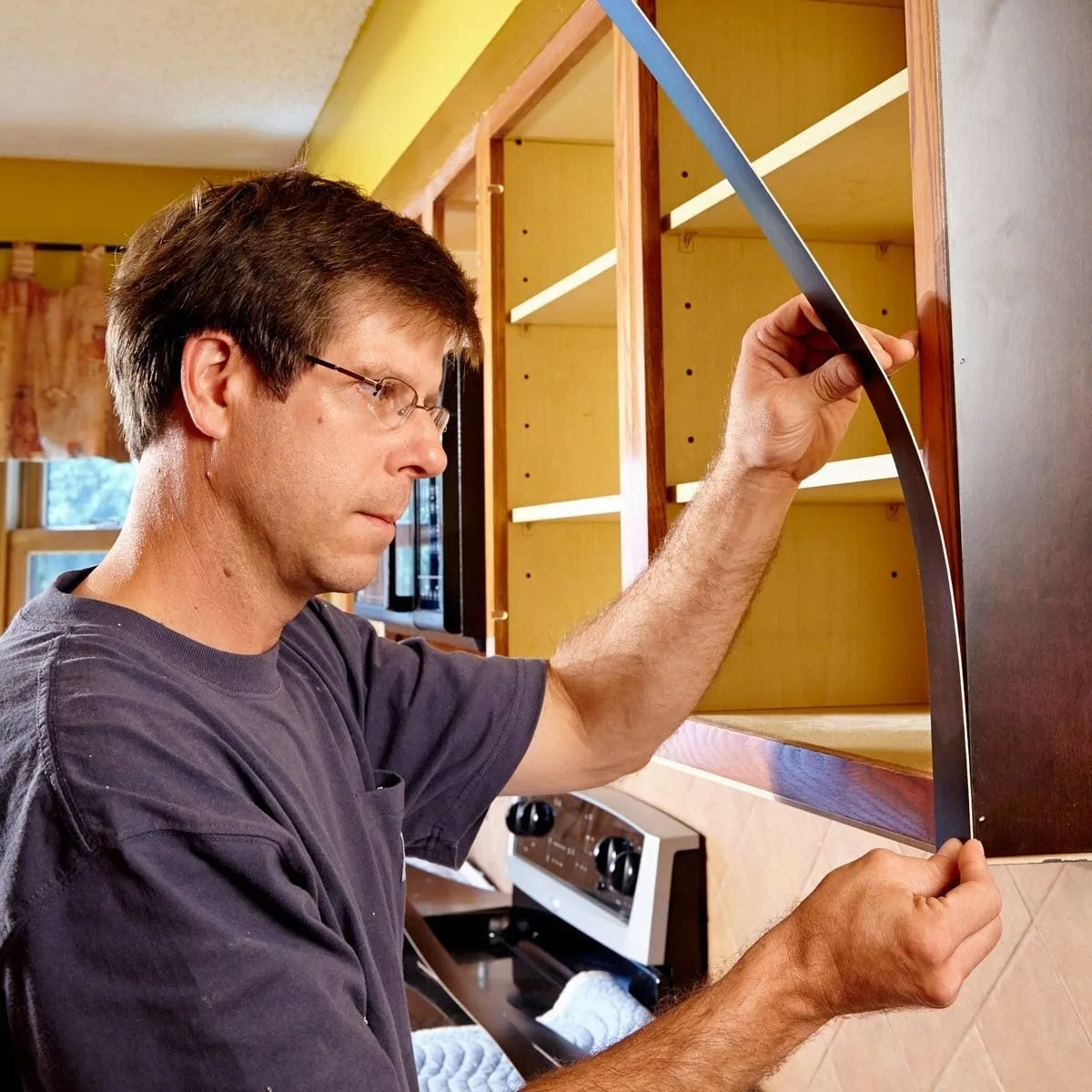
First visit.
We come to the kitchen, check the boxes for square and condition, look at what is under the surface, and measure every door and drawer front.
Choosing.
You pick the door style, finish and hardware, with samples in hand.

Written estimate.
The price is in writing, before anything is ordered.
Ordering.
Doors and drawer fronts are made to your measurements.
Removal.
The old doors, drawer fronts and hardware come off. The kitchen stays usable around the boxes.
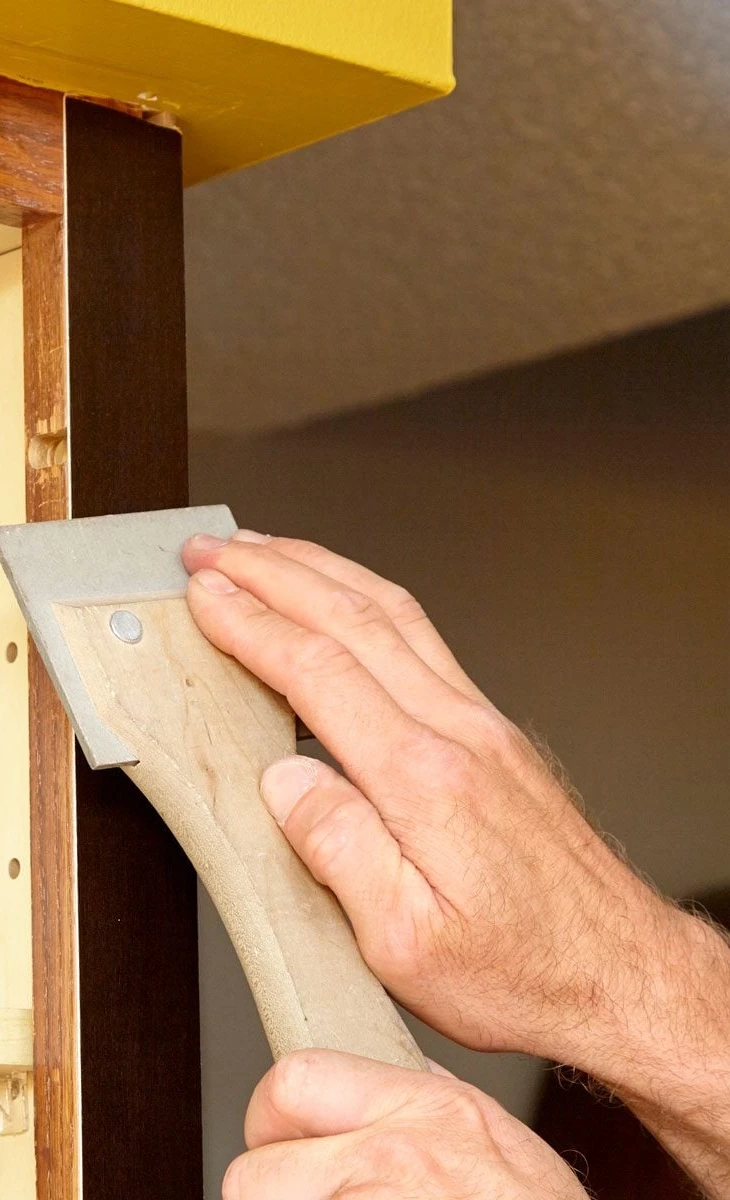
Box faces.
The visible faces of the boxes are prepped and covered so they match the new fronts.
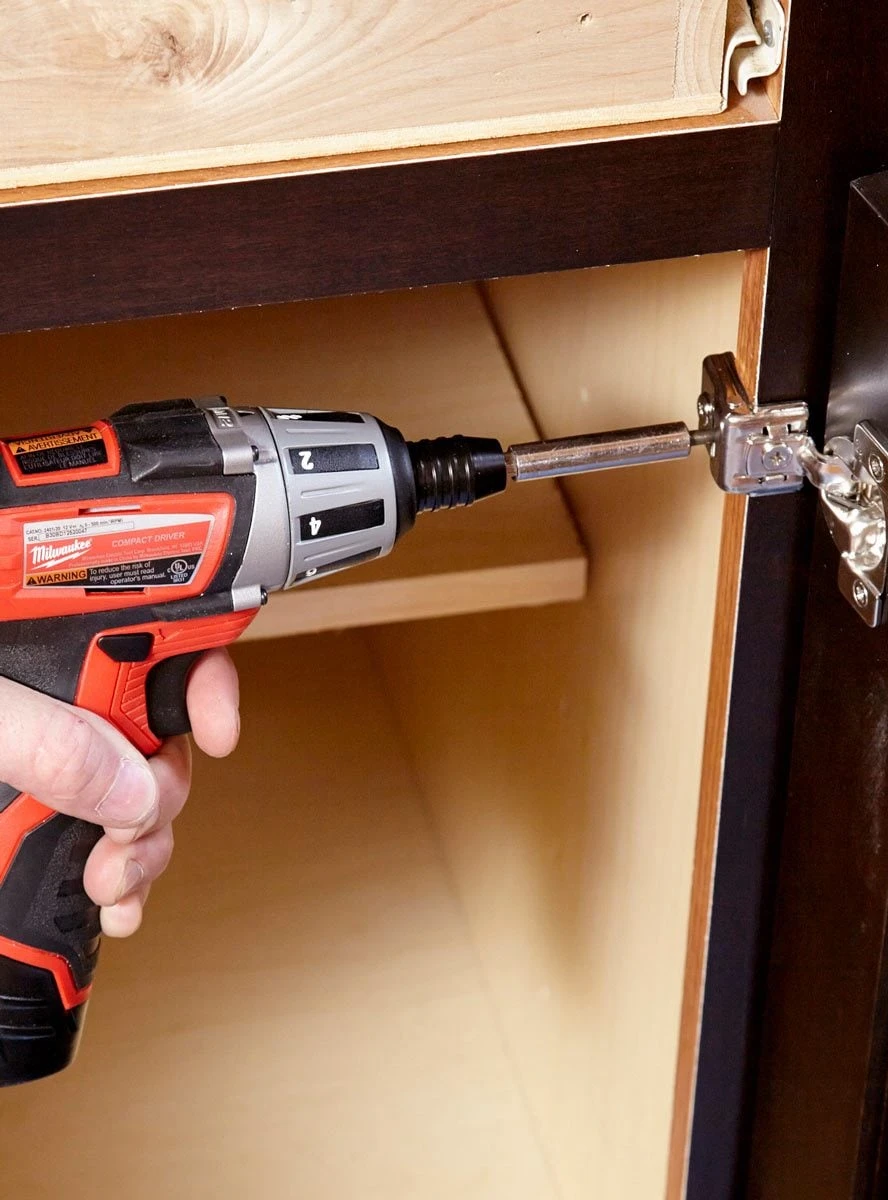
Installation.
New doors and drawer fronts are hung, then adjusted so the gaps are even.
Hardware and counters.
Handles go on. If you ordered new counters or a backsplash, they follow in their own step.
Final walkthrough.
We go through the kitchen with you, door by door, and fix anything that needs adjusting.
The same person stays with the job from the first visit to the walkthrough.
Questions
What is cabinet refacing?
It is replacing the doors and drawer fronts and giving the visible faces of the cabinet boxes a new surface, while keeping the boxes themselves. The result is a kitchen that looks new without demolition. Layout, plumbing and electrical stay as they are.
How much does cabinet refacing cost in Mesa?
Mesa Premier Cabinets' current price for a typical kitchen runs about $7,000 to $15,000, covering new doors and drawer fronts, new surface on the box faces, hinges, handles and installation. Your written estimate governs and is built from your kitchen. Counters and backsplash are separate.
Is refacing better than painting my cabinets?
They solve different problems. Painting changes the color and keeps your existing doors. If the doors are slab or worn at the edges, paint won't change their shape or fix the wear. Refacing gives you new door styles, new drawer fronts and new hinges. Professional painting generally costs less than refacing, so if the doors are in good shape and you only want a new color, paint is the cheaper route.
When will refacing not work?
Refacing won't work well if the boxes are swollen or crumbling particleboard, usually from a slow leak under the sink. It also won't work if you want the layout changed, or if the boxes are so racked that new doors can't hang straight. We check this at the first visit and tell you if replacing is the better choice.
How do I choose a door style?
Start with the look of the rest of the house. Shaker suits most kitchens, raised panel suits traditional ones, and flat slab suits modern ones. We bring samples to the first visit so you can see the style and finish against your own cabinets and counters.
Can I change the layout if I reface?
No. Refacing keeps the boxes where they are. If you want to move the sink, add an island, or open a wall, that is a replacement job, and the kitchen cabinets page covers it.
What stays and what goes in a reface?
The doors, drawer fronts and old hardware go. The boxes, shelves, layout and usually the drawer boxes stay. The visible box faces get a new surface to match the new fronts. Counters, sink and flooring stay unless you choose to change them.
How disruptive is refacing?
Much less than replacement. Nothing is torn out, the sink and stove stay connected, and the kitchen remains usable around the work. Doors and drawer fronts are off for part of the job, so you will see open boxes for a time. If you add new counters, there is a stretch without counters while they are templated and installed. The schedule goes in the written estimate.
Can I reface some cabinets and replace others?
Yes. A common mix is refacing the main runs and adding new boxes where you need more storage, such as a pantry or an island. The new boxes are built with the same doors, so they match. We price the mix as one job.
Is Mesa Premier Cabinets licensed and insured?
Yes. Our work is licensed and insured.
Will I know the price before the work starts?
Yes. You get a written estimate after the first visit and before anything is ordered. If you change the scope later, such as adding glass doors or upgrading hardware, the change is priced and agreed first.
Who do I deal with during the job?
The same person, from the first visit to the final walkthrough. If something comes up once the work is underway, that person calls you.
How do I get started?
Call the shop or write to the shop. Tell us about your kitchen, and we set up a visit to measure and look at the boxes.
#